
Alloy wheels are wheels cast or forged from a nonferrous metal alloy — usually aluminum blended with small amounts of elements like magnesium and silicon. Because aluminum weighs roughly one-third as much as steel, alloy wheels are typically lighter, shed brake heat better, and allow far more intricate designs, though
they cost more and tend to crack rather than bend under a hard impact.
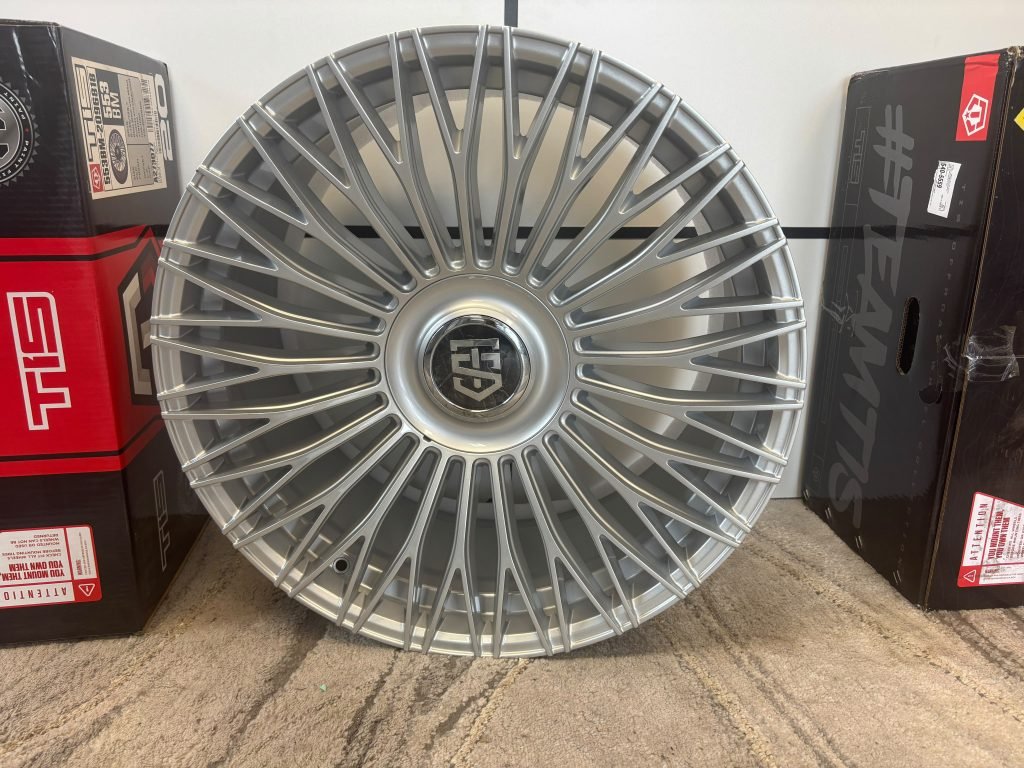
If you’ve shopped for wheels in the last decade, you’ve seen the word alloy on nearly every listing. It’s become shorthand for “the nice wheels” — the ones with clean spokes and a machined finish, as opposed to the plain painted discs hiding under your spare-tire cover. But
“alloy” actually describes what the wheel is made of, not how it looks. Understanding that difference is the fastest way to shop smarter and avoid paying for marketing instead of metal.
Here’s the plain-English version of what alloy wheels are, what they’re good at, where they fall short, and whether they’re worth it for your vehicle.
What are alloy wheels made of?
An alloy is simply a metal blended with other elements to improve its properties. Almost every alloy wheel on the road starts with aluminum as its base, because aluminum is light, conducts heat well, and is easy to shape. On its own, pure aluminum is too soft to trust
at highway speed, so manufacturers mix in measured amounts of other metals to add strength and durability. A typical aluminum alloy wheel breaks down roughly like this:
| Element | Approximate Share | What It Does |
|---|---|---|
| Aluminum | 90–97% | Lightweight base metal; good heat conduction and workability |
| Magnesium | 2–5% | Adds strength while keeping weight low |
| Silicon | 1–3% | Improves casting quality, reduces shrinkage as the metal cools |
| Copper, Nickel, Zinc, etc. | 1–2% | Fine-tune strength and corrosion resistance |
A second, rarer family of alloy wheels uses magnesium as the base instead of aluminum — the original “mag wheels.” Magnesium is even lighter than aluminum, which is why it still shows up on race cars and a handful of high-performance road cars. It also corrodes more easily and costs much more, so it never became mainstream. When someone says “alloy wheels” in everyday conversation, they almost always mean aluminum.
It’s worth knowing that the term “alloy wheel” is conventionally reserved for these non-ferrous metal alloys. Steel is technically an alloy too — iron mixed with carbon — but the industry treats steel wheels as their own separate category, which is why you’ll never see a basic steel
wheel marketed as an “alloy.”
Are alloy wheels the same as aluminum wheels?
For practical shopping purposes, yes — the two terms are used interchangeably almost everywhere, and a wheel labeled “aluminum” and one labeled “alloy” are usually the same kind of product. The pedantic distinction is that a true alloy wheel is aluminum blended with other metals for added strength, whereas “pure” aluminum would be softer. In the real world, virtually all aluminum wheels sold today are alloys, so don’t lose sleep over the label. If you want certainty about a specific wheel’s construction and weight, the spec sheet matters far more than whether the listing says “alloy” or “aluminum.”
How are alloy wheels made?
The manufacturing method changes the price, weight, and strength of an alloy wheel more than the exact metal blend does. There are three main processes:
Cast — molten aluminum is poured into a mold. This is how the large majority of alloy wheels are made. Casting is affordable and allows complex, eye-catching designs, which is why it dominates the market.
Flow-formed (flow-forged) — a wheel is cast and then spun under heat and pressure to stretch and compress the barrel. This sits in the middle: lighter and stronger than a plain cast wheel, but cheaper than a fully forged one.
Forged — a solid billet of aluminum is pressed into shape under enormous pressure. Forged wheels are the lightest and strongest of the three, and also the most expensive, so they’re aimed at performance and motorsport buyers.
That trade-off between cost, weight, and strength is big enough to deserve its own breakdown — we cover it in detail in our guide to forged versus cast wheels
What are the benefits of alloy wheels?
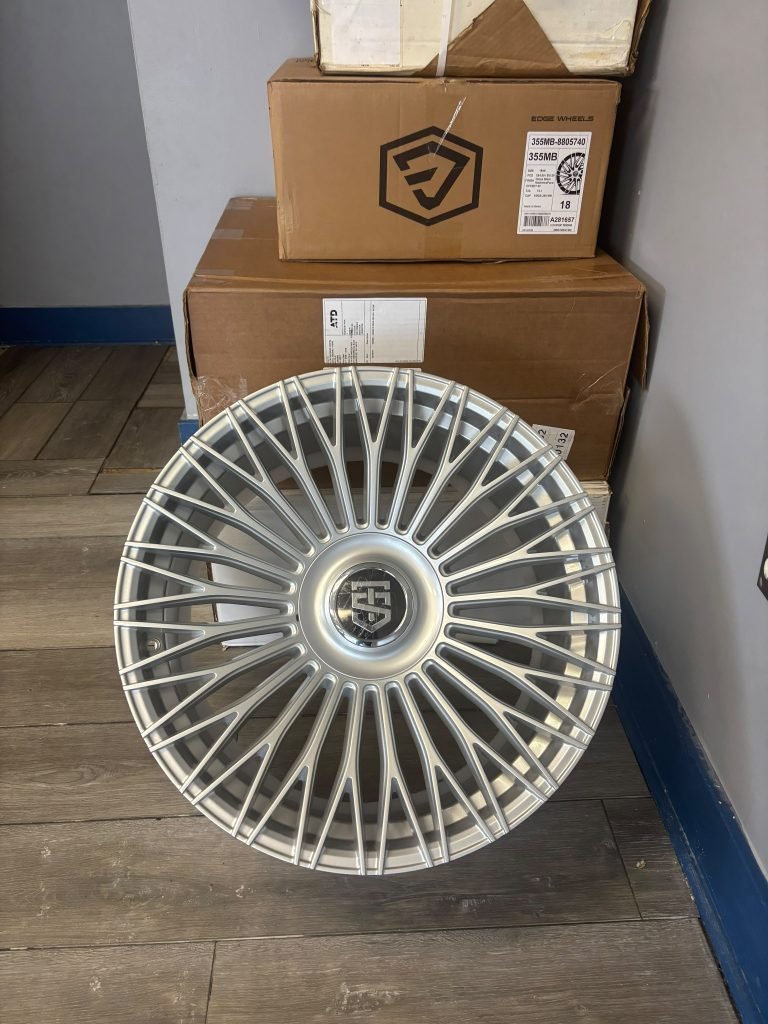
Lighter weight and sharper handling
Aluminum is about one-third the density of steel. So an alloy wheel can save meaningful weight over a comparable steel wheel. The payoff isn’t just lighter overall. wheels are unsprung mass. the weight your suspension has to control as it moves over bumps. Reducing
unsprung mass lets the suspension react faster to the road, which improves grip, ride quality, steering response, and braking. Lighter rotating weight can also help acceleration and fuel economy. One honest caveat: not every alloy wheel is lighter than its steel equivalent. A big, heavily styled cast wheel can actually weigh more than a small steel one. So check the listed weight rather than assuming.
Better brake cooling
Aluminum conducts heat far better than steel, and alloy wheel designs tend to be more open. Together that helps pull heat away from your brakes. Engineering analyses of aluminum versus steel rims have found aluminum alloy rims dissipate heat more effectively and hold
up better under repeated stress — useful on long downhill grades or spirited driving, where overheated brakes lose stopping power.
Design, finish, and resale appeal
Because casting and forging can produce intricate shapes, alloy wheels come in a huge range of spoke patterns, sizes, and finishes — machined, painted, gloss black, bronze, and more. This is the reason alloy wheels are the single most popular cosmetic upgrade for a car,
and a clean set genuinely helps a vehicle’s resale appeal.
What are the downsides of alloy wheels?
Alloy wheels aren’t perfect, and a good shop will tell you so:
They cost more. Expect to pay noticeably more than steel — often roughly two to three times as much for a comparable size — because of pricier material and more complex manufacturing.
They can crack instead of bend. Steel tends to bend on a hard pothole hit, which is often repairable. Aluminum is stiffer and can crack instead, and a cracked wheel usually needs replacing for safety reasons.
Bare finishes can corrode over time. Aluminum doesn’t rust like iron, but an unsealed alloy surface can oxidize and dull after a few years. Modern clear-coats and paint prevent this; the issue mainly affects bare or damaged finishes. Alloy wheels can also develop slow
air leaks from galvanic corrosion where the wheel meets the tire bead if they aren’t properly prepped.
Alloy wheels vs. steel wheels: which should you choose?
The short version: alloy wheels win on weight, looks, and braking; steel wheels win on price and impact toughness. That’s why steel is still common as a budget option and as a dedicated winter setup — a cheap steel wheel shrugs off potholes and road salt that you’d rather not subject your nice alloys to. If you want the full breakdown with a spec-by-spec comparison, read our dedicated guide on alloy versus steel wheels
Are alloy wheels worth it?
For most drivers, yes. If your car already came with alloy wheels from the factory — and the large majority of new cars do — replacing them with the right-fit set is a straightforward upgrade in looks and, often, performance. If you’re driving a work truck on rough job sites,
or building a dedicated snow setup, steel may still make more sense for those specific wheels.
Whatever you choose, the one thing that matters more than material is fit. A beautiful wheel that’s the wrong bolt pattern, offset, or diameter is useless, so always make sure a set will fit your car before you buy. When you’re ready, you can shop our alloy wheels by vehicle, or bundle them with rubber through our wheel and tire packages to get everything mounted, balanced, and shipped together.
FAQ section
Are alloy wheels the same as aluminum wheels? In everyday use, yes — the terms are used interchangeably and usually describe the same product. Technically, an alloy wheel is aluminum blended with small amounts of other metals like magnesium and silicon for added
strength, while “pure” aluminum is softer. Nearly all aluminum wheels sold today are alloys.
Are alloy wheels better than steel wheels? It depends on your priority. Alloy wheels are lighter, look better, and cool your brakes more effectively, which improves handling and ride. Steel wheels are cheaper and tougher against pothole and curb impacts, making them a popular budget and winter choice. Most modern cars come with alloy wheels from the factory.
Do alloy wheels rust? Aluminum alloy wheels don’t rust the way iron-based steel wheels do. However, a bare or damaged alloy surface can oxidize and dull over several years, and untreated wheels can develop slow air leaks from galvanic corrosion. Modern clear-coat and
paint finishes prevent this under normal use.
Can alloy wheels be repaired? Minor cosmetic damage like curb rash and scratches can usually be refinished. Structural damage is different: a hard impact can crack an alloy wheel rather than bend it, and a cracked wheel should be replaced rather than repaired for
safety. Always have a professional assess any structural damage.
Why are alloy wheels more expensive than steel? Alloy wheels cost more — often roughly two to three times as much as comparable steel wheels — because aluminum alloy is a pricier raw material and the casting or forging process is more complex. The machined finishes and intricate designs that make alloys attractive also add to the cost.